Leave Your Message
Earlier then, as far as selling things went, it was a more healthy world, which would fold perhaps into something like change for compostable Paper Plates. Now people are expected to not do anything but buy goods, without even considering giving populations practically what they need. Consumers are understanding, and this movement is not just an evolution but a revolution furthering the product lifecycle thinking. The year 2025 is going to be an important milestone for compostable paper plates in the greener move on this planet.
Starting in 2011, NINGBO VALUPAPER CO., LIMITED has focused on quality products that meet different customer environment and needs in the period of their turn into paper manufacturing. NINGBO VALUPAPER CO., LIMITED has begun offering a number of products as it embraces a more sustainable future. Compostable paper plates symbolize the changing market trends as well as the company's mission regarding environmental responsibility. Invest in innovative materials and production processes to help shape a future where convenience and sustainability can peacefully co-exist.
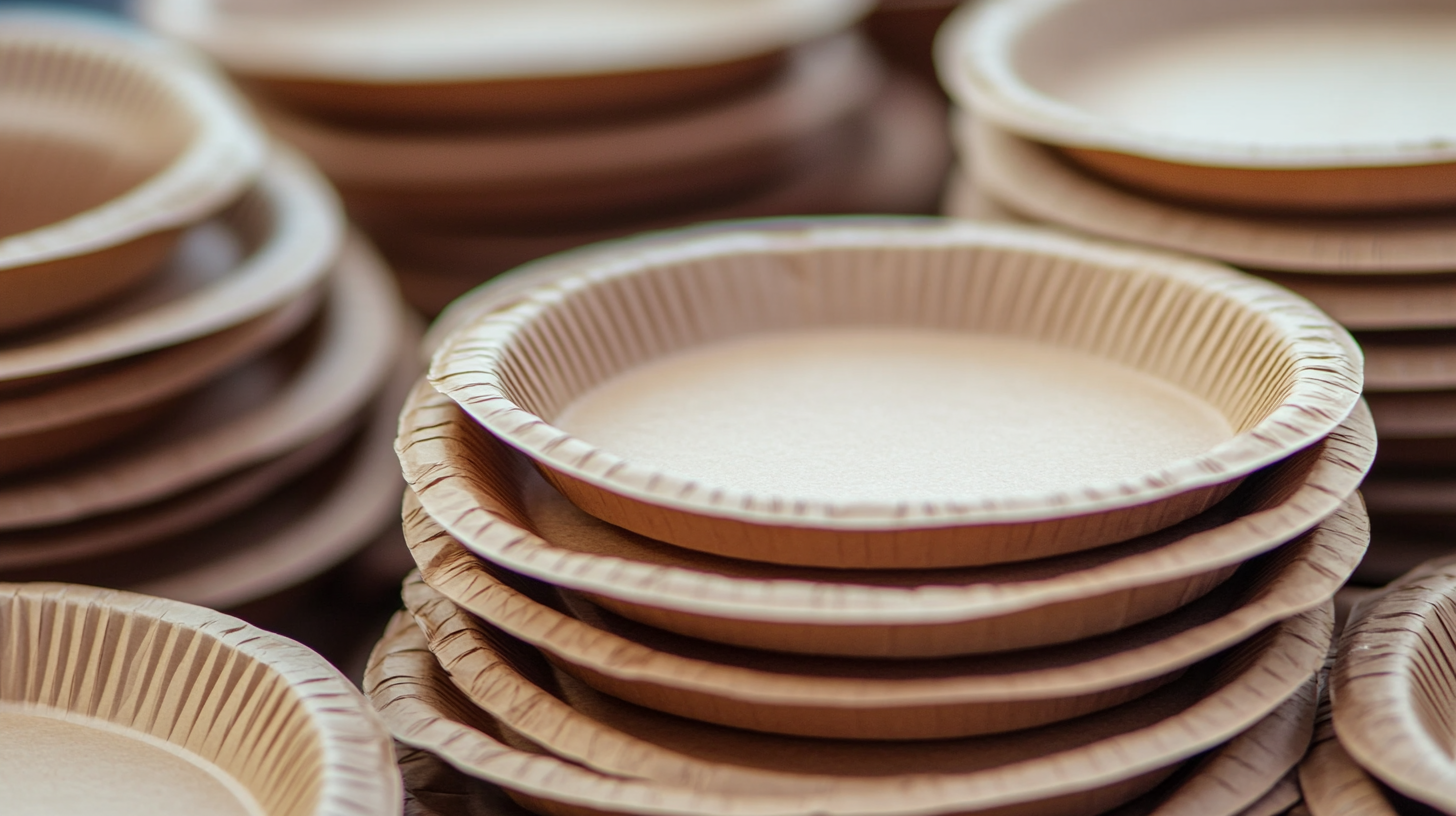
As we welcome 2025, sustainable tableware alternatives are witnessing unprecedented demand due to rising awareness about environmental issues and the potential hazards of single-use plastics. Consumers today are more conscious than ever about the things they are buying and are seeking products that correspond with their values of sustainability and eco-friendliness. This change is most pronounced in the food service industry, where compostable paper plates are becoming increasingly popular as one possible, practicable way to cut down on waste and help the earth. In response to the increasing social demand for more responsible alternatives, manufacturers are innovating the materials and processes for producing compostable paper plates. Paper plates made of renewable resources like plant fibers and starches are durable just as conventional paper products and are completely compostable. The rise in the use of these sustainable options by restaurants, caterers, and event planners gives them additional benefits in terms of environmental impact and brand reputation to attract eco-conscious consumers. In addition, the regulatory pressures and customer expectations further channel the innovation for sustainable tableware. The harder the government cracks down on plastic usage, the more companies seek alternatives complying with the law and the increasingly demanding green product market. Come 2025 and compostable paper plates may also not only be served as the players in the game of the industry as such, but could also choose to give rise to the sustainable operational practices of an entire different stream of its own across various platforms.

With increasing environmental consciousness and changing consumer behavior lately, the global compostable paper plates market is undergoing significant changes. Demand for sustainable alternatives has surged as consumers and organizations downsize their carbon footprints. Compostable paper plates made from renewable resources offer an answer for ecologically aware consumers who care about waste and its impact on the environment. The trend is closely allied to wider movements toward sustainability, especially in food service and event sectors where disposables are the norm.
The broad market drivers give credence to an industry shift toward eco-conscious dining experiences and regulatory pressures for biodegradable materials. All around the globe, municipalities are enforcing bans on single-use plastics and providing disposable compostable options as alternatives. Besides, the social and cultural celebrations that almost always involve food gatherings have generated a demand for goods that serve functional purposes while reflecting an environmentally-conscious ethos. As consumers are being more selective about the products they choose, the emergence of compostable paper plates has provided them with not just a viable choice but also the moral option to commit to environmental protection.
Furthermore, manufacturers are beginning to respond to this trend by innovating their product offerings in terms of various designs and functionalities that satisfy heterogeneous consumer demands. Companies are investing in research and development to improve the performance properties of compostable materials so that they can compete in durability and usability with traditional disposables. Given the changing dynamics of the market, it is clear that compostable paper plates will play an even more important role in the transition toward sustainable paths of consumption for a long time to come.

The market for compostable paper plates is rapidly changing with consumer preference for greener alternatives. Rising plastic pollution awareness globally has made industry leaders strategize their operations with regard to challenges posed by newer regulatory requirements and market trends. These developments are further highlighted in the recent initiatives such as highlighted in the report of the United Nations Environment Programme, which reflect the competitive terrain in which new packaging solutions innovated by companies serve.
Also, an emerging trend in this ever-changing market is the manufacture of food-safe paper products that are entirely plastic free. Such replacements will suffice consumers demanding compostable utensils and will be a perfect alternative for the increasingly closed containers that formerly relied on plastic lining. These changes will address regulations and cater to consumer needs in terms of responsible disposal alternatives. Therefore, while firms evolve with changing times, the quality of compostable products will become a focal point.
In addition, reliable substitutions to ban single-use plastics in Canada are applicable to restaurants and food service providers as they transition to more compostable options instead of single-use plastics. Thereby, these are no longer only regulatory requirements but also a catch for environmentally inclined customers. The market looks increasingly towards innovations where players are striving to offer a broader spectrum of compostable solutions that go a long way in making them functional while at the same time promoting sustainability towards a greener future in Food Packaging.

Improvements in technology are bringing about a rapid change in the compostable paper plates scenario. The overall compostable packaging market is expected to reach USD 49.75 billion by 2025, according to MarketsandMarkets recent research. The growth is expected with a CAGR of 15.4% from 2020, where paper plates account for a portion of the packaging considered as compostable, to a large extent due to growing consumer awareness of environmental sustainability and the growing usage of such environmentally friendly products across many industries.
Developments made to date in manufacturing process techniques have enhanced the performance and cost efficiency of compostable paper plates. This new coating technology using biopolymer coating boards has made the plates better water and grease resistant and more suitable for use with almost all possible food products. According to a recent publication in the Journal of Cleaner Production, Compostable Plates may no longer be materially inferior to traditional plastic substitutes, either in terms of their environmental impact or their usability, thus enabling sectors to shift toward greener solutions.
Furthermore, improvements in raw materials from sustainable bamboo fibers and by-products from agriculture are stimulating another launch of products of better qualities but at lower prices. Research from Ellen MacArthur Foundation predicts that a shift into biodegradable perimeter could dramatically cut down the carbon footprint of paper plate production by even 50% as compared to regulars. Ahead, as these technologies continue to innovate, the future of compostable paper plates will be bright, marking a big milestone in the journey toward sustainability.
Environmental awareness among consumers is impacting compostable products' market dynamics, especially in the field of disposable tableware. Such shifts toward compostable products, like paper plates, are a conspicuous reaction to the growing awareness of the environmental impact of single-use plastics. The transition is a visible testament of increasing environmental consciousness developing in response to shifting consumer preferences that value sustainability.
Education is, therefore, an important variable in this development. An increase in consumer awareness regarding how their buying decisions impact the planet has led to a demand for products that not only biodegrade but are also sustainably sourced. Brands promoting their eco-friendly credentials and offering information on composting will probably woo consumers with environmental concerns. Awareness thus adds to competitive advantages for companies selling compostable paper plates, as consumers would like to match their buying decisions with their values.
The television and social media have played an even stronger role in forcing the trend of compostable product acceptance into overdrive. Campaigns promoting reducing plastic usage and encouraging sustainable alternatives reached a larger audience, thereby encouraging more people to consider the option of compostable products for their day-to-day lives. As awareness among consumers grows, the acceptance of compostable products receives a significant impact, hence resulting in changing market scenarios and eventually determining the innovations in disposable tableware.
Regulatory trends significantly impact the future of single-use tableware, mainly compostable paper plates, due to the increasing global concern for sustainability. Governments and environmental organizations are now becoming more aware of plastic waste's destructive impact on the ecosystem and, therefore, heavily regulate single-use plastics. Such regulations usually encourage biodegradable alternatives and, therefore, pressure consumers and producers into using environmentally friendly substitutes.
In many areas, legislation currently enforces the use of compostable materials for food service. For example, some towns are enforcing bans on polystyrene foam products, forcing restaurants and catering services to switch to compostable paper plates. This switch not only serves to tackle waste management issues but creates a greater desire for sustainability as consumers are increasingly gravitating toward products that lessen their environmental footprint.
Moreover, such legislation often compels manufacturers to innovate over time continually. Producing compostable paper plates that meet stringent environmental criteria not only helps enhance environmental sustainability, but also provides new markets. With companies trying to improve the experience of use and aesthetics of their products, we can expect an array of different customizable solutions that fit the changing demands of eco-conscious customers in line with government initiatives on waste reduction.
Compostable paper plates were expected to see incredible advancement along the same lines with the rest of the market for disposable paper goods. In 2023, the marketplace is expected to be approximately 596.4 billion yuan with respect to disposable paper products, which indicates that there is a substantive need for these products made of wood pulp, bamboo, sugarcane residue, and other biodegradable material. As consumers become more aware of the sustainability aspect, the entire culture is shifting from popular to compostable alternatives.
According to predictions, the rise in environmental consciousness will also benefit the compostable paper plate market and project significant continuous growth for subsequent years. The global paper packaging market alone shall surpass a valuation of $250 billion by 2025, primarily owing to the demand for low-carbon solutions in packaging made from plant-based materials. Innovative materials and processes, which can improve the usability and visual appeal of compostable paper plates, will be critical to generating consumers' and businesses' interest.
As the market starts to open up, the chances for cooperation between the manufacturers themselves and sustainable material suppliers will increase. This collaboration will not only be for better products, but it will also be for stronger positions in the market as companies try to get an edge in what will surely be a growing market for biodegradable solutions. Concepts like "bamboo instead of plastic" add fuel to the fire of trends such as social voices in sustainable living and create a new wave of innovation in disposable tableware.
The compostable paper plate sector is anticipated to encounter a variety of challenges by 2025 that will greatly affect the growth of the market. According to a recent report by Research and Markets, as far as compostable packaging is concerned, which includes paper plates, it is expected to grow at a CAGR of 14.5% between 2020 and 2025, arriving at approximately $6.8 billion. Yet, the growth of this particular market is hindered by certain urgent factors.
One of the challenges is inconsistency in standards and certification requirements for compostable products across regions. Many regulations regarding biodegradable materials differ from one region to another, leading to confusion for both producers and consumers. This confusion is compounded by nearly 60% of products in the compostable industry not passing even local composting standards, Smithers Pira states. Such failure raises barriers for these products to be adopted in a rather broad manner. Also, the materials used for making such plates, mainly PLA (polylactic acid) and bagasse, sometimes require specific conditions not offered in several municipal composting facilities.
Another challenge that really seems to be right on the heels of the first one is competition against single-use products of the traditional kind. Environmentally conscious as let seems to be, plastic plates and paper plates continue to be cheaper and more available. The Biodegradable Products Institute report states that although production costs of compostable plates have shown a declining trend over the last decade, they still remain about 20-30 higher than their non-compostables. This price difference prevents the consumer and business from moving over, thus slowing the adoption of compostable alternatives in the food service industry.
All challenges need to be overcome to keep the compostable paper plate industry growing beyond 2025, requiring collaboration among stakeholders, regulations that are clearer, and consumer education to give birth to an alternative future that is sustainable.
Regulatory trends are increasingly promoting the adoption of biodegradable alternatives to single-use plastics, particularly compostable paper plates, as governments recognize the environmental impact of plastic waste.
Cities are enacting bans on polystyrene foam products to address waste management challenges and to encourage the use of compostable materials in food service, aligning with broader sustainability commitments.
The industry will face challenges such as inconsistent standards for compostable products, competition with cheaper traditional disposable options, and the specific composting conditions required for materials like PLA and bagasse.
The global market for compostable packaging, including paper plates, is projected to grow at a CAGR of 14.5% from 2020 to 2025, reaching approximately $6.8 billion.
The inconsistency in standards and certifications for compostable products across different regions leads to confusion, with many products failing to meet local composting standards.
While production costs for compostable plates have decreased, they still remain about 20-30% higher than those of non-compostable counterparts, making it less attractive for consumers and businesses to switch.
Consumers increasingly prefer products that minimize environmental footprints, driving demand for compostable tableware and encouraging manufacturers to innovate.
Key factors include collaboration between stakeholders, clearer regulations, and increased consumer education to promote the benefits of compostable options.
Educating consumers about the benefits and proper disposal methods for compostable products is crucial to overcome barriers to adoption and enhance sustainable practices.
Common materials include PLA (polylactic acid) and bagasse, which require specific composting conditions that may not be available in all municipal facilities.